- Delivery to UK & Ireland
- Ethical & Sustainable Meat Boxes
- Slow Food Award Winners

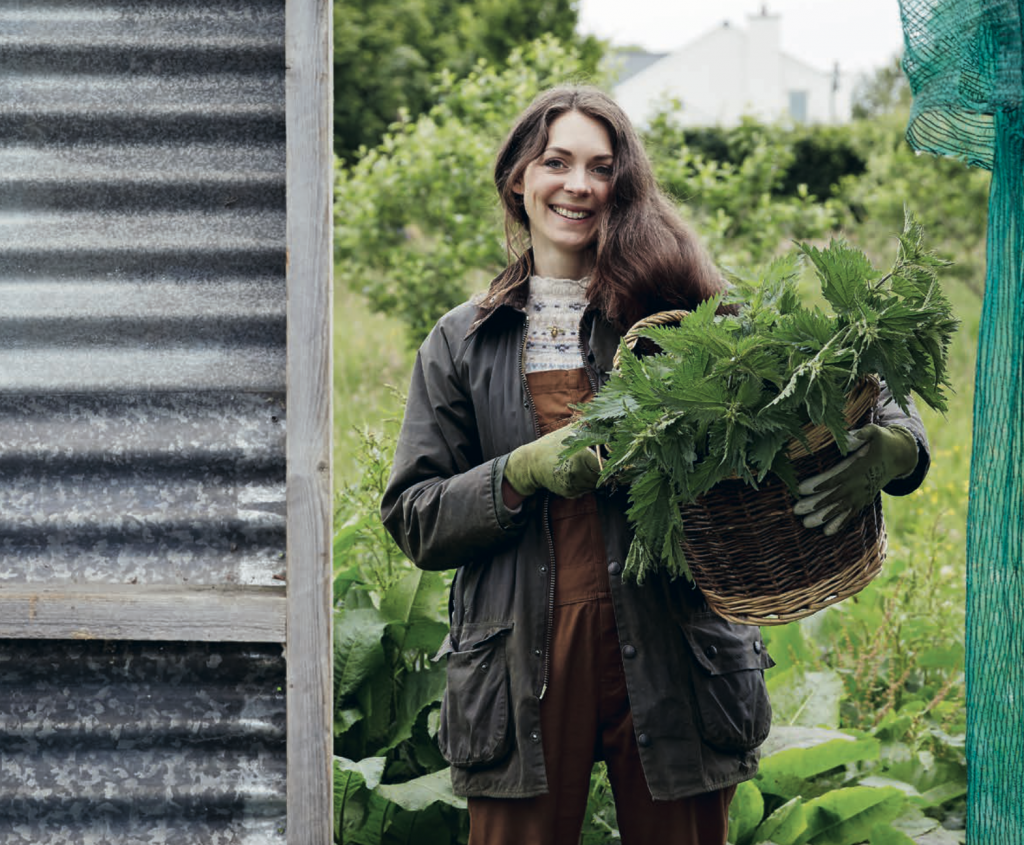
One of the ideas of regenerative farming is having areas that are wild within the farm. We protect and enhance species-rich, natural grasslands here, and we tailor our grazing regime to maximise this biodiverse system. We use no sprays, no artificial fertiliser — because we don’t need them, and they don’t have a place in long-term soil health. All our methods, from agroforestry to cover crops to mob grazing, are built around the same idea: soil is the foundation of regenerative farming, and everything else follows from it.
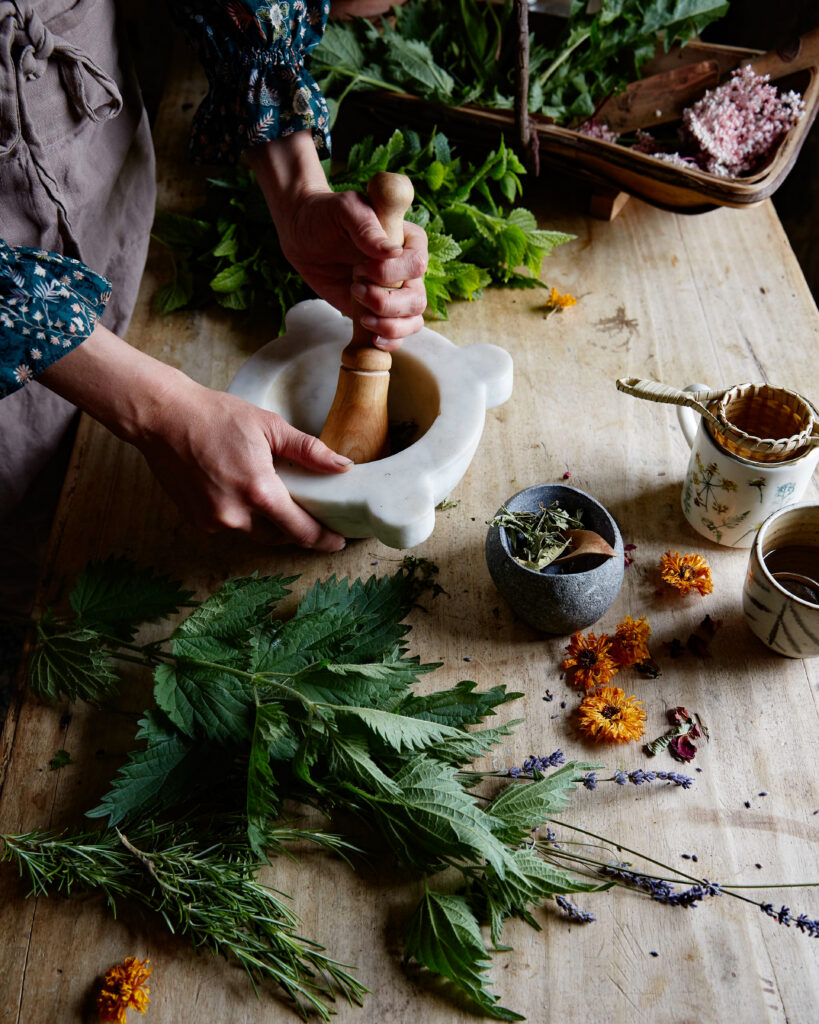
Then there’s us. We’re an important part of managing all of this, but also lucky enough to enjoy the bounty of it through harvests, produce and even foraging. As most of you know, I wrote The Garden Apothecary a while ago now, so foraging is something I’ve been obsessed with for a long time. It actually began when I was a child, and I picked up Juliette de Bairacli Levy’s book on herbalism. It was a small, boring-looking beige hardback that I found in my parents’ library, and I absolutely devoured it. I was fascinated by the pictures of all the different plants, from dandelion to tansy, and all the different remedies you could make from them. My poor mother was the guinea pig for many a strange concoction derived from that book.
But from it, I also learned how to forage. I would discover all sorts of interesting plants growing in the stone walls or the garden beds, and I’d take my time dissecting them — figuring out how they grew, what their seed pods looked like, the smell of them, the colour of the petals — and just spend ages fascinated by all of it.
My love for foraging sort of ebbed away when I was a teenager, and I went to fashion college and immersed myself in the world of culture, fashion and art. But it came back to me once I left and moved up here to Broughgammon Farm.
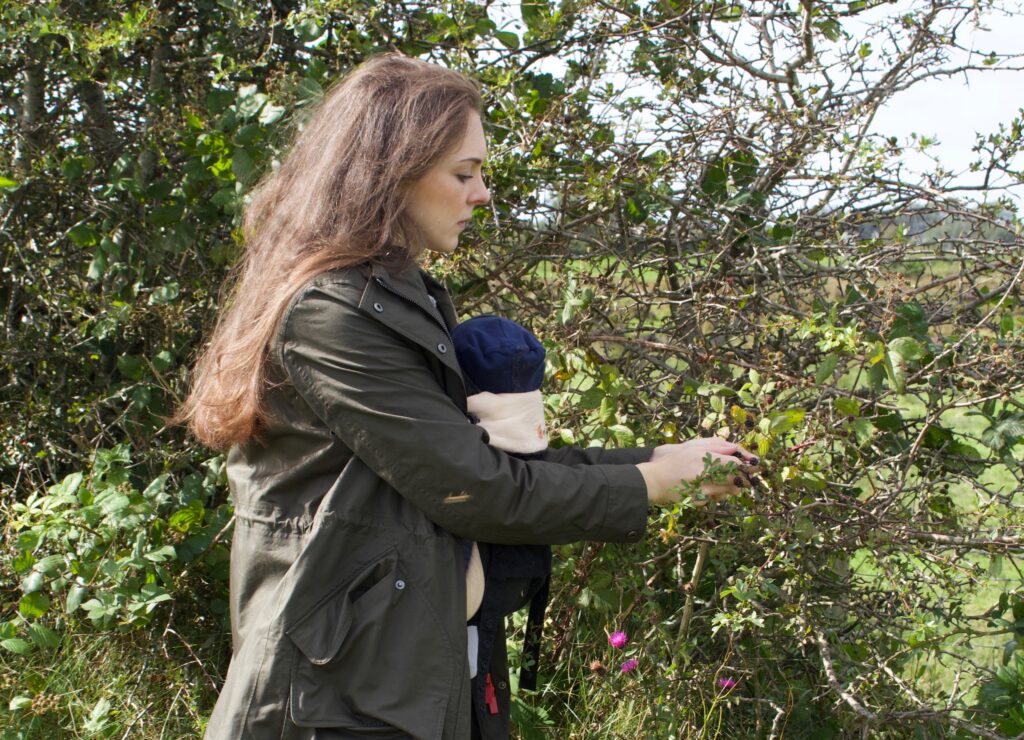
The farm back then was in its infancy — basically just a spark of an idea. Charlie had some baby goats in a caravan. Very few of the buildings had been renovated, and we were still in the process of planting most of the hedgerows and the little woodlands, and managing land that was in a terrible state.
For me, it was an opportunity to really delve deep into my interest in herbs and herbalism, as well as foraging, wild food and seasonal eating. I learned how to grow and garden, and I learned all about wild food and remedies. Like I mentioned, I’ve always had a real interest in herbalism, and I also loved natural beauty and skincare, and making my own products. So for me, this was such an exciting time of my life. I read every book I could get my hands on, educated myself as much as I could through online courses, and just submersed myself in this new, exciting world.
Foraging, for me, was my real entranceway into communicating and connecting with nature — learning a deep respect for it, and building up the kind of reciprocal relationship I now know to be so key to land regeneration and environmental practice in general.
It started for me with simple weeds like nettles and dandelions, which still remain some of my most beloved plants. I found that instead of fighting against them in the garden, I started to embrace them and let areas rewild naturally. And from that, I learned how incredible plants like nettles and dandelions really were.
I learned that nettles were an incredible superfood — chockablock full of minerals and vitamins, perfect for revitalising the body and waking up the system. I learned all about dandelions being the first source of food for hungry bees in the springtime, and how their roots and leaves are full of amazing properties that help detoxify the system and support the liver. It suddenly seemed shocking to me that people would still put weed killer on these plants, when actually they were some of the most resilient, incredible parts of our natural ecosystem — feeding us and increasing biodiversity at the same time.
Whenever I do a foraging walk, or get to speak on the topic, I really hope it inspires people to understand the ecosystem in its totality —where everything plays its part. Especially when you look to global warming and the environmental crisis: these plants have withstood so much. They’ve been on this planet way longer than we have (the genus Urtica originated about 60 million years!). They’ve withstood all sorts of crazy changes, they’ve withstood our war against them, and yet here they still are — thriving, becoming stronger. These are plants we can learn from medicinally, and in an energetic way too.
Foraging is a natural continuation of regenerative farming. On a farm like ours, where we employ permacultural and regenerative principles, foraging is part of that reciprocal relationship we have with the land. We support the land through good, sustainable practices — we replenish the soil with natural fertilisers, like with the muck from the animals — and nature responds with abundance at this time of year. All the berries on the hedgerows, the vegetables in the field, all the plants that have self-seeded. There’s just so much to forage, so much abundance — not just for us, but for the birds, the insects, the animals too.
And that’s the beauty of the system we have going here at Broughgammon Farm — everything working in tandem to create, hopefully, good food for everybody. Whether that’s a foraging walk with wild food and berries, our free-range rosé veal, or a bundle of fresh carrots dug from the soil, it all works together in this incredible system, supporting each other. And I have to say, I’m really proud to be a part of it.
Come hear me speak about foraging and it’s place on a farm at Fields Good Festival on the 5th September and going us for a foraging walk here at the farm (next one is on 13th September)

